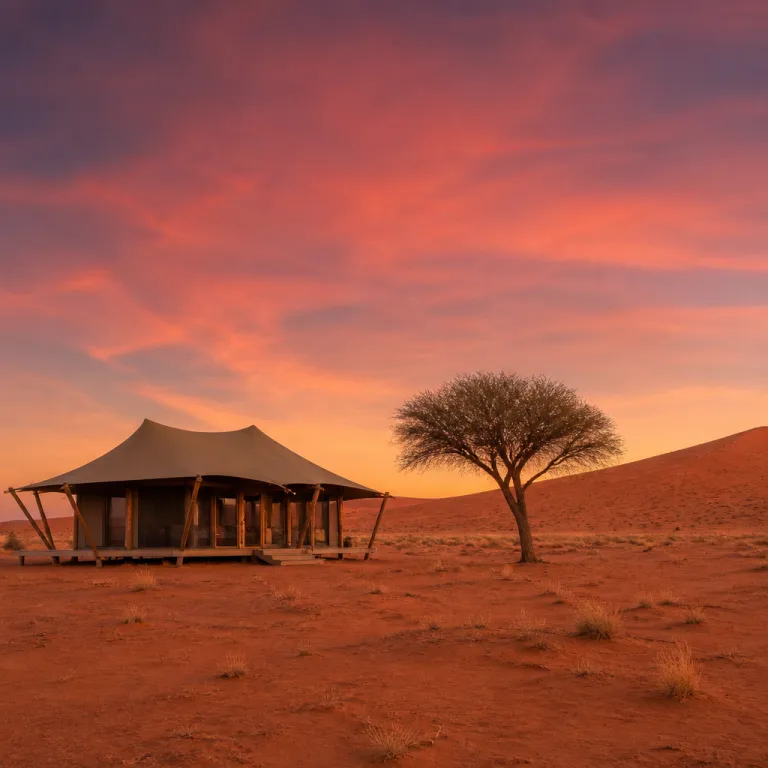
The Kalahari’s quiet drama: how the desert rewrites your safari expectations
For travellers who know every bend of the Sabi River, a stay at a Kalahari luxury lodge in South Africa feels like stepping onto an entirely different continent. The Kalahari Desert stretches over roughly 900 000 square kilometres across south Africa, Botswana and Namibia, and its central pans, red dunes and vast skies create a sense of scale that no bushveld valley can match. Out here the light is harsher, the silence deeper and the rhythm of every safari experience slower, which is exactly why repeat guests are coming back to this desert black horizon rather than to another game reserve in the Lowveld.
Instead of dense thickets, the central Kalahari opens into grasslands and fossil riverbeds where you can watch wildlife cross kilometres of sand in a single game drive. This landscape changes how you read every piece of kalahari game behaviour, from springbok pronking on the pans to a brown hyena trotting home at dawn with its shaggy coat catching the first light. The result is a luxury safari that is less about ticking off the Big Five and more about understanding how each species has adapted to the kalahari desert, from the iconic black maned kalahari lion to the meerkats that stand guard like sentries over the dunes.
Silence is the Kalahari’s most underrated luxury, and it is what many guests remember long after the last sundowner. On a private game drive you can switch off the engine and hear nothing but wind over the sand, with no convoy of vehicles queuing for a sighting as often happens in more crowded national park circuits. This is where a carefully chosen kalahari reserve in the northern cape or the kalahari northern fringes of Botswana comes into its own, offering space, privacy and a feeling that your trip has taken you to the edge of africa rather than just another safari stop.
Tswalu Kalahari: South Africa’s most exclusive desert lodge for seasoned safari guests
Tswalu Kalahari sits in the southern reaches of the kalahari desert, in the remote northern cape of south africa, and it has become shorthand for the most rarefied kind of desert luxury. At 114 000 hectares, this private game reserve is the largest in south africa, and the Oppenheimer family has deliberately capped guest numbers so that every safari feels like a private conservation project rather than a resort. For couples who have already stayed at classic private safari camps such as an elegant Timbavati game reserve lodge, Tswalu offers a next chapter where the focus shifts from leopard in riverine forest to desert black silhouettes of oryx on the horizon.
Each Tswalu safari is built around private game drives, with your own vehicle, guide and tracker, which radically changes the pace of your trip. You can spend an entire morning following a coalition of cheetah across the central kalahari style dunes, or sit quietly with habituated meerkats as they emerge from burrows, without worrying about another vehicle needing a turn. This flexibility is why photographers and experienced africa hands gravitate here, because the kalahari game viewing is about waiting for behaviour rather than racing between sightings, and because rare species such as pangolin, aardvark and brown hyena are realistic possibilities rather than whispered legends.
The design of Tswalu’s safari camps leans into the desert rather than shielding you from it, with stone, thatch and wide decks that frame the kalahari northern skyline. At night, the lack of light pollution turns stargazing into a headline experience, and many guests choose to sleep out under the stars on raised platforms, listening for the distant roar of a kalahari lion with its unmistakable black maned profile. For couples used to the polished service of cape wine country hotels and urban sanctuaries in south africa’s cities, this level of comfort in such a remote reserve feels almost surreal, yet it never loses its grounding in conservation and the San People’s deep connection to the land.
Kgalagadi and beyond: adventurous routes through the Kalahari’s wild reserves
While Tswalu Kalahari defines the high end of a kalahari luxury lodge in South Africa, the broader region offers a spectrum of experiences for guests who want to push further into the desert. The Kgalagadi Transfrontier Park, a vast national park shared by south africa and Botswana, covers about 3,6 million hectares of dunes and dry riverbeds where black maned kalahari lions patrol the Auob and Nossob valleys. Here the experience kalahari travellers seek is more self reliant, with long drives between camps, basic but atmospheric accommodation and the constant sense that you are moving through one of africa’s last great open systems.
Self drive guests in Kgalagadi quickly learn that central kalahari style patience is essential, because wildlife often appears as distant silhouettes before resolving into individual species. You might spend an hour watching a single waterhole, only to be rewarded with a procession of gemsbok, wildebeest and finally a brown hyena slipping in at dusk, its shaggy outline almost desert black against the sand. For those who prefer more structure, guided game drives and organised safari camps on the park’s fringes offer a bridge between pure self drive adventure and the curated ease of a private luxury safari lodge.
Off grid properties in the kalahari reserve network increasingly rely on solar power and satellite connectivity, and many of the best have embraced low impact design without sacrificing comfort. If you are curious about how remote lodges balance sustainability with service, it is worth reading about off grid luxury powered by solar panels and satellite links before planning your trip. Across these reserves, from the kalahari northern fringes near Botswana to the more southerly dunes of the northern cape, the unifying thread is space, silence and a style of game viewing that rewards those who are willing to wait.
Desert specialists: wildlife you come to the Kalahari to see
For many repeat safari guests, the real draw of a kalahari luxury lodge in South Africa is the chance to focus on species that rarely feature on a Kruger itinerary. The desert adapted wildlife of the kalahari desert has evolved to survive on minimal water and extreme temperatures, which changes everything from daily movement patterns to social behaviour. When you sit on a private deck watching a herd of springbok pick their way across the central pans, you are seeing a different chapter of africa’s story, one that is written in sand rather than riverine forest.
Headline predators still feature strongly, and the black maned kalahari lion remains the region’s most photographed resident, its darker mane thought to be linked to genetics and climate. Cheetah thrive in the open terrain, using the long sightlines of the central kalahari to run down prey, while smaller african wild cats and bat eared foxes work the night shift along the dunes. Guests who have spent years chasing leopard sightings in other game reserves often find that a single extended encounter with a brown hyena or aardvark here feels more special, precisely because these species are so rarely seen elsewhere in south africa.
Daylight brings its own specialists, from meerkat families that allow you to sit within a few metres as they sun themselves, to sociable weavers whose vast communal nests hang like haystacks from camelthorn trees. As one local guide likes to explain to first time visitors, "Lions, cheetahs, giraffes, meerkats, and various antelope species" are all part of the Kalahari’s cast, but the real magic lies in how they have adapted to this desert stage. A well chosen kalahari reserve, whether in the northern cape or across the border in Botswana, will structure game drives to maximise your chances of seeing these desert specialists without turning the experience into a checklist.
Planning your Kalahari chapter: logistics, timing and pairing with the rest of South Africa
Reaching a top tier kalahari luxury lodge in South Africa takes more effort than flying into a mainstream safari hub, and that is part of its appeal. Most guests route through Johannesburg or cape Town, then connect via scheduled or charter flights to remote airstrips in the northern cape or to gateways serving the central kalahari and surrounding pans. The extra legs add time to your trip, but they also create a psychological distance from city life that you feel the moment the desert horizon replaces the skyline.
Seasonality matters in a semi arid environment where average annual rainfall can sit around 100 millimetres, and the dry months usually offer the most reliable wildlife viewing around scarce water sources. Temperature swings can be dramatic, with icy pre dawn game drives followed by warm afternoons, so packing layers is essential for a comfortable luxury safari. Many experienced travellers choose to pair a few nights in the kalahari desert with time in the cape Winelands or a refined city stay, using properties with strong conferencing and hospitality credentials such as a polished Sandton city centre hotel as their urban bookend.
Respect for local culture is another thread that runs through the best kalahari game experiences, especially where lodges partner with San People communities for guided walks and storytelling. These encounters, when handled sensitively, add depth to your understanding of how humans have lived with kalahari game and desert conditions for millennia, far beyond the timeframe of modern reserves. As interest in eco tourism and cultural travel grows, the most thoughtful properties in south africa and Botswana are proving that a private reserve can deliver both high end comfort and meaningful engagement with the land and its first inhabitants.
FAQ
What wildlife can I expect to see in the Kalahari compared with Kruger
The Kalahari is known for desert adapted species rather than dense Big Five concentrations, so you should expect different sightings from Kruger. You are likely to encounter black maned kalahari lions, cheetah, brown hyena, meerkats, gemsbok and springbok, along with smaller predators such as bat eared foxes and african wild cats. Elephants and buffalo are rare here, which is why many travellers pair a kalahari luxury lodge in South Africa with a more traditional bushveld reserve on the same trip.
Is the Kalahari Desert accessible year round for luxury safaris
The kalahari desert is accessible throughout the year, but conditions change significantly between seasons, which affects both comfort and wildlife viewing. Dry months usually concentrate animals around limited water sources, making game drives more productive, while the green season brings dramatic skies and occasional afternoon storms. Luxury safari lodges and national park camps remain open, so the best time depends on whether you prioritise sightings, cooler temperatures or photographic light.
How do I get to Tswalu Kalahari and other private reserves
Most guests reach Tswalu Kalahari and similar private reserves by flying into Johannesburg or cape Town, then connecting on a scheduled or charter flight to a dedicated airstrip in the northern cape. From there, lodge teams handle transfers directly to the property, so the final leg is usually seamless despite the remote setting. If you are visiting the Kgalagadi Transfrontier Park or central kalahari style areas in Botswana, a combination of regional flights and long distance driving is more common.
Are there cultural experiences with San People in Kalahari lodges
Several kalahari luxury lodges in South Africa and neighbouring countries work with San People communities to offer guided walks, tracking demonstrations and storytelling sessions. These experiences are designed to highlight traditional knowledge of wildlife, plants and desert survival, and they can add meaningful context to your safari if handled respectfully. When booking, ask how the lodge partners with local communities and how your stay supports long term cultural and conservation projects.
What should I pack for a Kalahari safari in terms of clothing
Packing for the Kalahari means planning for temperature extremes, because mornings on game drives can be close to freezing while midday in the sun feels hot. Layering is essential, so bring a warm jacket, beanie and gloves for dawn, plus light, breathable clothing in neutral colours for the rest of the day. A wide brimmed hat, high SPF sunscreen, closed shoes for walks and a good pair of binoculars will make your experience kalahari ready without overpacking.