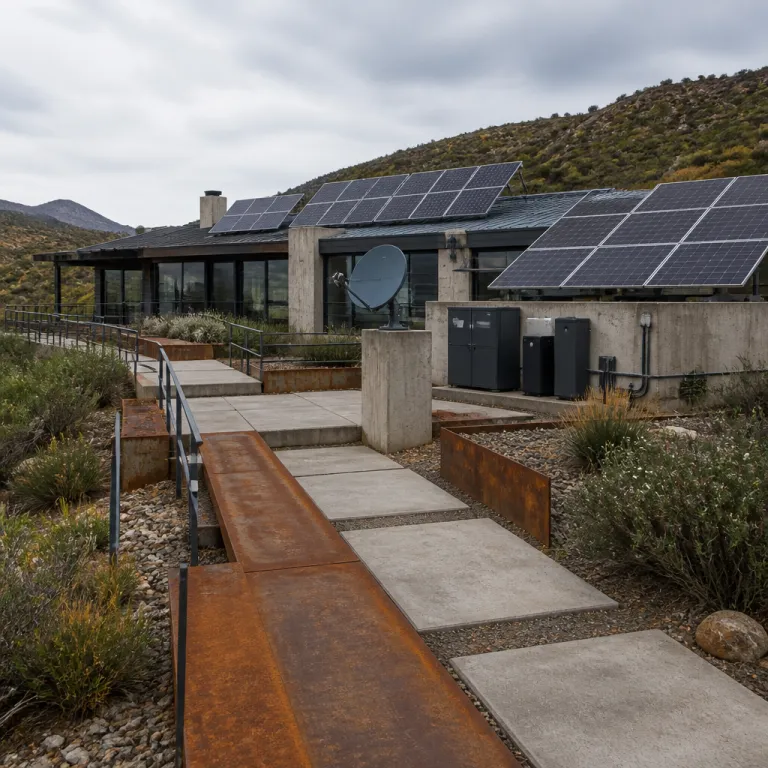
What an off-grid solar lodge in South Africa really is
Off-grid solar lodge South Africa stays are no longer fringe experiments. In practice, an off-grid lodge in the south of the country runs its own solar energy system, water supply and waste treatment without any municipal grid access. For couples used to city hotels, the idea of sleeping in a remote valley powered only by the sun can feel both thrilling and slightly technical.
At its core, the energy solution is simple but carefully engineered. Roof or ground mounted solar panels feed a central power system, which charges a bank of batteries sized to handle the lodge’s full electrical load through the night and during cloudy spells. A typical luxury safari property might install 80–150 kW of solar panels and 400–800 kWh of lithium battery storage, enough to run suites, kitchens and pools without constant generator use. Industry benchmarks from African lodge installers and case studies from hybrid microgrid suppliers such as SMA and Victron place most high end safari systems in this range, depending on occupancy and climate. When you read that a property is fully off grid solar, it usually means the owners have invested heavily in battery storage, intelligent monitoring and a backup generator that rarely runs but protects comfort standards.
South African operators have moved fast because of the national grid system’s fragility. Regular load shedding has made a reliable grid connection more aspiration than reality in many safari destinations, so luxury properties have turned to solar power to stabilise operations and control long term cost. Industry case studies suggest that hybrid systems can cut diesel use by 60–80% compared with generator only setups, which also reduces noise and maintenance. For guests, that shift means air conditioning, hot water and Wi Fi continue seamlessly while nearby towns sit in the dark.
Esiweni Luxury Safari Lodge in the Free State is a clear example of this new model. The lodge operates entirely on solar energy with a dedicated solar system and battery storage, proving that a remote cliff top retreat can match the comfort of any city suite. Publicly available information from the lodge and its technical partners describes a carefully engineered installation that balances battery sizing, generator capacity and remote monitoring, so guests never need to think about kilowatts or inverters.
The engineering behind quiet luxury in remote safari properties
Behind every silent, lantern lit dinner at an off-grid solar lodge South Africa couples will find a surprisingly sophisticated power system. A typical hybrid system in a remote safari lodge combines a large solar array, a bank of deep cycle batteries and a low noise generator that only cuts in when the battery load drops below a set threshold. The aim is to keep the generator off for most of the day, letting solar power and battery storage carry the property.
Engineers start with detailed battery sizing calculations based on years of occupancy data, appliance efficiency and seasonal sunshine. They design the solar system and grid tied capable inverters so that, if a reliable grid ever reaches this part of South Africa, the lodge can connect without rebuilding its installation. In many projects, that means specifying inverters that can handle 50–200 kVA of combined load, with enough headroom for future expansion. Until then, remote monitoring dashboards track every watt of energy, giving managers real time visibility of cost, performance and maintenance needs.
Water and waste systems follow the same self sufficient logic. Boreholes, filtration units and gravity fed tanks reduce the energy load on pumps, while on site treatment plants handle wastewater without stressing any distant grid solar infrastructure. When you compare this to a more conventional luxury camp such as a premier safari lodge in the Timbavati, the guest facing experience feels similar, but the back of house engineering in an off-grid lodge is far more autonomous.
Connectivity is the final piece of the puzzle for South African properties that market to international guests. Many off-grid lodges now use satellite internet, proving that a remote lodge can offer video calls and streaming without any physical grid access. Typical systems deliver 20–100 Mbps shared across the property, which is ample for email, calls and light streaming when managed sensibly.
Typical technical ranges for remote luxury lodges
| Component | Typical range | Notes |
|---|---|---|
| Solar panel capacity | 80–150 kW | Roof or ground mounted arrays sized for lodge demand |
| Battery storage | 400–800 kWh | Lithium batteries covering night use and cloudy spells |
| Backup generator | 60–150 kVA | Runs only when batteries reach a low threshold |
| Satellite internet | 20–100 Mbps | Shared bandwidth, adequate for typical guest needs |
From load shedding to leadership in sustainable safari energy
South Africa’s load shedding crisis has unintentionally created a new standard for off-grid solar lodge South Africa experiences. When the national grid system began to fail with increasing frequency, high end safari properties realised that diesel generators alone were a fragile and noisy solution. The shift toward solar power and hybrid systems was as much about guest experience as it was about carbon emissions.
Today, many South African lodges run a hybrid system that blends solar, batteries and a backup generator into one integrated energy solution. During the day, solar panels carry most of the power system load while also charging batteries for evening use, which dramatically reduces generator run time and fuel cost. At night, the battery storage takes over quietly, and only when the batteries reach a low threshold does the generator start, often while guests sleep.
International examples reinforce this trend. Remote lodges in Alaska and the Rocky Mountains now operate with a similar mix of solar, storage and backup generation, proving that properties in harsh climates can maintain 24/7 power. A typical installation in these regions might pair 50–120 kW of solar with 300–600 kWh of batteries and a 60–150 kVA generator, enough to ride out storms and peak demand. These figures align with published microgrid case studies from North American off-grid resorts and engineering firms that specialise in islanded power systems. The same principles apply in South Africa, where Esiweni Luxury Safari Lodge shows how a fully solar installation can handle everything from kitchen equipment to heated plunge pools.
For couples, the practical benefit is simple yet powerful. While nearby villages endure another round of load shedding, your electricity bill is effectively prepaid through the lodge’s investment in solar and batteries, so there are no surprise outages. This resilience allows chefs to lean into trends such as the private chef movement in South African lodges, confident that ovens, fridges and induction hobs will not fail mid service.
The guest experience: seamless comfort, subtle technology and real romance
From a guest’s perspective, an off-grid solar lodge South Africa stay should feel almost indistinguishable from a conventional five star hotel. You arrive at a remote airstrip or gravel road, step into a cool suite with silent air conditioning, and find your devices charging from a power system you never see. The technology is there, but the romance lies in how invisible that system remains.
Thoughtful design keeps the energy load low without compromising comfort. A well designed suite uses natural cross ventilation, deep verandas and high performance glazing to reduce the need for mechanical cooling, which in turn shrinks the required battery sizing and solar array. LED lighting, efficient pumps and induction cooking all trim the electricity bills that the lodge would otherwise pay to a reliable grid, freeing budget for better linens, guides and wine lists.
For couples, the emotional payoff is the sense of being far from everything yet lacking nothing. Nights are darker because there is no nearby grid tied town, so the Milky Way feels close enough to touch, while the only hum you might hear is a distant generator cycling briefly to protect the batteries. Many guests report that the knowledge of staying in a low impact lodge deepens the experience, turning each game drive and each candlelit dinner into part of a broader conservation story.
Even connectivity, often a concern for remote escapes, is handled with quiet competence. Operators confirm that well designed off-grid lodges maintain full comfort standards, and that reassurance extends to Wi Fi, where satellite links and remote monitoring tools keep networks stable. If you want to pair this wilderness immersion with a mountain retreat that also values thoughtful design, look at a refined Drakensberg stay such as a carefully curated Giants Castle lodge experience.
How to read the numbers: carbon, cost and what couples should ask
Choosing an off-grid solar lodge South Africa escape is partly an emotional decision and partly a technical one. The emotional side is easy to feel when you stand on a deck above a river, but the technical side shows up in questions about carbon, cost and long term reliability. Asking the right questions before you book helps you understand how serious a property is about its energy solution.
Start with the basics of the solar installation and storage. Ask how much of the lodge’s annual energy comes from solar power versus a generator, and whether the batteries can carry the full load through a typical night without diesel support, because that ratio tells you a lot about both emissions and running cost. As a rough guide, a solar powered safari lodge that sources 70–90% of its electricity from the sun can cut annual diesel use by tens of thousands of litres, avoiding many tonnes of CO2. Properties that invested early often have years of performance data and remote monitoring reports, which they can share in simple terms rather than kilowatt jargon.
Next, explore how the lodge manages its relationship with any external grid system. Some South African properties remain technically grid tied for legal reasons but operate as if they were fully off grid, using the grid only as an emergency backup to their solar system and battery storage. Others have no grid access at all, relying entirely on hybrid systems that blend solar, batteries and a generator into one resilient power system.
Finally, consider how this infrastructure shapes your own electricity bill in a broader sense. While you are not paying a separate electricity bill at checkout, the lodge’s investment in solar, batteries and efficient design often stabilises room rates over the years, because managers are less exposed to volatile fuel prices and grid solar tariffs. When a property can show clear thinking on battery sizing, hybrid system design and long term maintenance support, it is usually a sign that every other aspect of the operation is equally well considered.
FAQ
How do off-grid lodges provide internet for guests who need to stay connected ?
Most off-grid lodges in South Africa now rely on satellite internet combined with remote monitoring tools to keep connections stable. Antennas mounted on main buildings link to orbiting satellites rather than any terrestrial grid system, which means connectivity continues even when nearby towns lose grid access. Bandwidth is not limitless, but it is usually sufficient for email, calls and light streaming.
Are off-grid solar lodges less comfortable than traditional luxury hotels ?
Well designed off-grid properties are not a compromise on comfort. By pairing efficient architecture with robust solar power, battery storage and a backup generator, they maintain steady air conditioning, hot water and lighting even during load shedding. In practice, a modern solar powered safari lodge can match the comfort standards of an urban five star hotel while running on a far cleaner energy mix.
Is solar power reliable enough for a full service safari lodge operation ?
With the right battery sizing, hybrid systems and professional installation, solar power is highly reliable for safari properties. Lodges typically combine a large solar array, a substantial bank of batteries and a generator into one integrated power system, so there is redundancy if clouds or high load periods occur. Industry experience across South Africa and other remote regions shows that these energy systems can deliver consistent, 24/7 electricity when properly maintained.
What should couples ask before booking an off-grid solar lodge in south Africa ?
Ask how much of the lodge’s annual energy comes from solar versus generator use, and whether the batteries can handle the full nightly load without diesel support. It is also worth checking what kind of remote monitoring and technical support the property has in place, because that indicates long term reliability. Finally, enquire about any conservation projects linked to the energy solution, so you understand how your stay contributes to the wider landscape.
Does going off grid significantly reduce a lodge’s environmental footprint ?
Moving to a primarily solar system usually cuts diesel consumption dramatically, which lowers both direct emissions and the indirect impact of fuel transport into remote areas. When paired with efficient buildings, water systems and waste treatment, an off-grid lodge can operate with a far smaller footprint than a similar property drawing from a coal heavy grid solar network. Many South African lodges now track these metrics over years and share them with guests as part of their sustainability reporting.