Graaff-Reinet’s architectural heritage in the heart of the Karoo
Graaff-Reinet sits in the central Karoo as one of South Africa’s most concentrated heritage towns. The density of preserved buildings, from whitewashed Cape Dutch homesteads to Victorian townhouses, turns a simple hotel stay into an immersion in architectural heritage and layered history. For travellers driving between Cape Town and Johannesburg, choosing a heritage hotel in Graaff-Reinet transforms a necessary stop into a destination in its own right.
The town of Graaff-Reinet is widely noted for having more than 200 listed heritage sites, an unusually high number for a settlement of its size in South Africa. Walk a few hundred metres from your hotel in the quiet town centre and you pass Cape Dutch gables, Karoo verandas, and restored Reinet-style houses that now host galleries, restaurants, and guest rooms. This compact layout means you can move easily between meetings, art and culture spaces, and dinner reservations without ever needing to drive across town.
Staying in a historic Graaff-Reinet hotel places you inside this living museum rather than on its edge. Many accommodation options occupy former official residences, trading houses, or private mansions that once anchored the Eastern Cape frontier. Their thick walls and high ceilings were designed for Karoo summers, while modern features such as climate control, high-speed Wi-Fi, and curated lighting now support business travellers who still want a strong sense of place.
Drostdy Hotel and its neighbours: sleeping in Cape Dutch and Karoo elegance
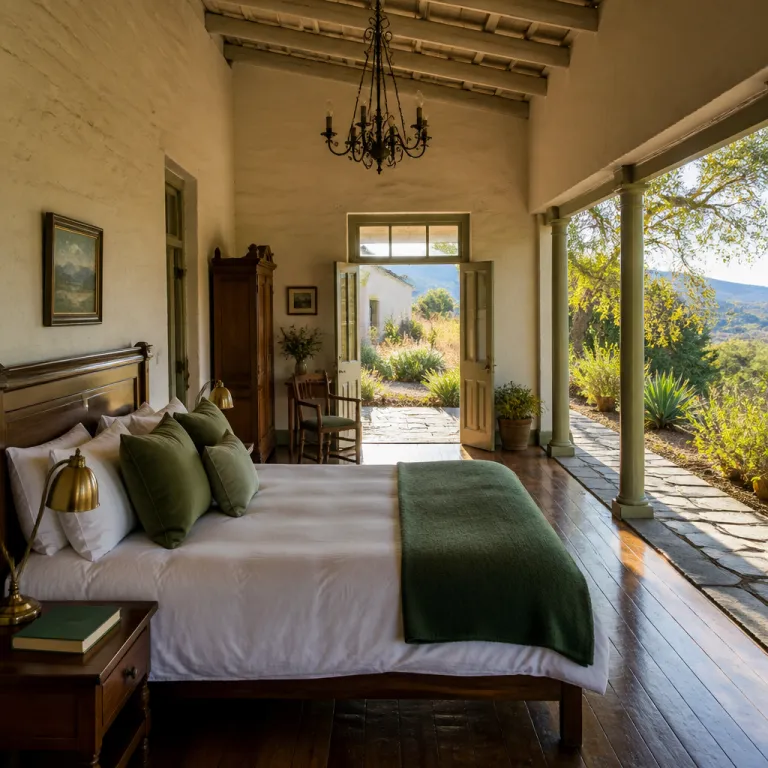
Drostdy Hotel is the architectural headline act in Graaff-Reinet’s historic core. Often described as the town’s grand old hotel, Drostdy was originally built in the early 1800s and anchors a row of restored Cape Dutch buildings that once housed officials of the Reinet drostdy, the old administrative seat. Today this ensemble of heritage accommodation blends Dutch-style gables, deep stoeps, and manicured courtyards with a quietly luxurious African art collection.
Several separate wings of the Drostdy complex show how Cape Dutch and Karoo vernacular architecture evolved in the Eastern Cape. One wing channels classic Dutch symmetry, another reflects later Karoo town adaptations with corrugated-iron roofs and shaded verandas, while a third offers more contemporary suites with clean lines and subtle African textiles. Across these spaces, the hotel interiors highlight local art and culture, referencing nearby Reinet Museum collections and the broader history of the Karoo.
Just a few streets away, Villa Reinet Guest House occupies a national monument property that feels like a private Reinet house, while The Whyte House offers a more contemporary take on Karoo luxury with wide glass doors framing the surrounding valley. Guests can step from these hotels into the town’s grid of jacaranda-lined streets, where views shift from whitewashed gables to the distant Camdeboo ridges. As local guide Andries Botha notes, “When people check into a heritage hotel in Graaff-Reinet, they are not just booking a room; they are sleeping inside the story of the Karoo.” One regular visitor from Cape Town described arriving after a week of boardrooms as “like walking onto a film set where the props are real houses and the extras are your neighbours for the night” — a slower, more textured alternative to sleek city properties without sacrificing comfort.
From town streets to Camdeboo National Park and the Valley of Desolation
What sets every stay in a Graaff-Reinet heritage hotel apart is its proximity to Camdeboo National Park. In less than fifteen minutes you can drive from Drostdy Hotel or any central address to the park gates, where the landscape opens into a basin of plains, koppies, and distant escarpments. This Camdeboo setting wraps the town in a natural amphitheatre that constantly reminds you how small human history is beside geological time.
The Valley of Desolation viewpoint, sometimes called Desolation Valley or the Wonders of the Karoo, rises above the park in a series of dolerite columns that plunge into the plains below. From here the view stretches across the town of Graaff-Reinet, the patchwork of farms, and the wider Eastern Cape plateau, especially atmospheric at sunset when the rocks glow and the lights of the town flicker on. Many business travellers time their check-in at Drostdy Hotel or Villa Reinet so they can head straight up to this lookout before settling into meetings or dinner.
Camdeboo National Park also offers walking trails, game-viewing loops, and picnic spots that work well as informal offsite venues for small executive groups. A morning drive followed by a structured session back at the Reinet drostdy complex or another heritage property can feel more restorative than a conventional boardroom in Johannesburg or Cape Town. For readers planning broader itineraries, pairing this Karoo leg with a coastal or safari segment is straightforward; guides on planning a luxury safari stay around the weather in South Africa in May show how easily Graaff-Reinet fits into multi-stop journeys. For practical planning, most visitors allow at least half a day for Camdeboo drives and the Valley of Desolation, aiming for late-afternoon light and packing layers for cooler evening temperatures.
Karoo cuisine, local culture, and slow evenings in town
Evenings in Graaff-Reinet unfold at a Karoo pace that suits both leisure guests and executives stepping off a week of city meetings. Many hotel kitchens in the historic centre champion local dishes built around lamb, venison, seasonal vegetables, and the region’s apricots and figs. Menus at Drostdy Hotel and other dining rooms often reinterpret traditional African recipes with lighter sauces and contemporary plating, while still feeling rooted in the surrounding farms.
Outside the hotels, the town’s restaurants and wine bars cluster within easy walking distance, which encourages guests to explore on foot and engage with local residents. You might start with a glass of Cape red on a shaded stoep, then move to a dining room where Karoo dishes share the table with seafood from the south coast and cheeses from the wider Eastern Cape. This compact layout also makes it simple to combine a working dinner with a short stroll past Reinet house facades and under big Karoo skies.
During the day, Reinet Museum institutions and private galleries showcase the art and culture of the Karoo and broader South Africa, from rock-art interpretations to contemporary photography. Short drives lead to Nieu-Bethesda, a village known for its outsider art and mountain-framed setting, or towards Beaufort West for those continuing deeper into the Karoo. For business travellers used to polished conference facilities in Sandton, a few days here can feel like a reset, though those needing formal venues may still prefer refined city-centre events at properties such as Maslow’s Sandton for their main meetings before retreating to Graaff-Reinet.
Why Graaff-Reinet works for business leisure travellers
For executives who extend work trips into leisure, Graaff-Reinet offers a rare balance between connectivity and escape. Central heritage hotels in town deliver reliable Wi-Fi, quiet workspaces, and attentive service, while the surrounding Karoo landscape encourages you to close the laptop and look up at the stars. This contrast between structured days and expansive evenings is precisely what many high-performing travellers seek when they talk about meaningful downtime.
Drostdy Hotel, Villa Reinet, and The Whyte House all understand the needs of this business-leisure segment. Staff can arrange early breakfasts, flexible check-in times, and private dining rooms, while still steering guests towards Camdeboo National Park drives, Valley of Desolation sunsets, or guided walks through the town’s architectural heritage. The official guidance from local tourism bodies is simple: “Book in advance. Explore local attractions. Enjoy Karoo cuisine.” — a succinct summary of how to approach a stay here.
Compared with a night in Beaufort West or a generic roadside stop, a night or two in Graaff-Reinet adds narrative and depth to a long-haul itinerary across South Africa. You leave not only with emails answered but with a clearer sense of how Cape Dutch and Karoo architecture shaped this part of Africa, how local history intersects with national-park conservation, and how a small town can punch above its weight in cultural terms. For many repeat visitors, that combination of efficiency and enrichment makes Graaff-Reinet a fixed point on every Eastern Cape road map.
Planning your route: positioning Graaff-Reinet within a South African journey
Graaff-Reinet sits roughly halfway between Cape Town and Johannesburg on the N9, which makes any stay in a Karoo heritage hotel here easy to fold into a broader itinerary. From the Cape side, travellers often route via the Garden Route or the interior Karoo, arriving in town by late afternoon in time for a Valley of Desolation sunset. From the north, the drive from Johannesburg can be broken with a stop in Beaufort West before continuing south into the more historic Eastern Cape landscapes.
The town also links neatly with Gqeberha (Port Elizabeth) and the wider south coast, creating a triangle that combines ocean, Karoo, and city experiences. Many guests pair two nights at Drostdy Hotel or another Graaff-Reinet property with a coastal stay and then a safari, using the town as the cultural anchor in the middle. This pattern reflects a broader trend in South Africa where heritage towns and their architectural legacy are becoming as important as wildlife reserves for travellers seeking layered experiences.
When planning, consider how much time you want for Camdeboo National Park, Reinet Museum visits, and side trips to Nieu-Bethesda or surrounding farms. One full day allows for a park drive, a Valley of Desolation viewpoint visit, and a slow walk through town, while two or three days open space for stargazing, local wine tastings, and unhurried meals. Whatever the duration, choosing a central heritage hotel in Graaff-Reinet ensures that every step from your room leads directly into the town’s history, its Karoo light, and its enduring sense of place in South Africa.
Key figures on Graaff-Reinet’s heritage and hospitality
- Graaff-Reinet is frequently cited as having around 220 recognised heritage sites, giving its hotels unparalleled access to architectural history and creating one of the highest concentrations of listed buildings in South Africa (source: local tourism records and South African Heritage Resources Agency summaries, figures subject to periodic updates).
- Drostdy Hotel traces its origins to the early 1800s and is widely regarded as one of the town’s oldest continuously operating hotel properties, forming a cornerstone of the Reinet drostdy precinct (source: property archives, regional heritage surveys, and Eastern Cape tourism brochures).
- The town’s coordinates, approximately 32.25 degrees south and 24.53 degrees east, place it firmly within the semi-arid Karoo, where clear skies support some of the best stargazing conditions in the Eastern Cape (source: national mapping data and South African topographical surveys).
- Heritage tourism has been identified as a growth segment for Graaff-Reinet, with the restoration of historic hotels expected to increase cultural tourism revenue and support local employment over the coming decade (source: regional tourism strategies, municipal planning documents, and Eastern Cape development reports).
FAQ about heritage hotels in Graaff-Reinet and the Karoo
What is the oldest hotel in Graaff-Reinet?
Drostdy Hotel is generally recognised as one of the oldest hotels in Graaff-Reinet, with origins in the early 1800s. This property anchors the historic Reinet drostdy precinct and showcases restored Cape Dutch and Karoo architecture. Staying here places guests inside more than two centuries of town history.
Are heritage hotels in Graaff-Reinet pet friendly?
Some properties in Graaff-Reinet do welcome pets, but policies vary and may change over time. Drostdy Hotel, for example, has at times allowed small and medium dogs in designated rooms. Travellers should always confirm current rules directly with their chosen hotel before arrival.
What amenities do Graaff-Reinet heritage hotels typically offer?
Most heritage hotels in the town combine period architecture with contemporary comforts. Guests can usually expect air conditioning, quality bedding, Wi-Fi, secure parking, and on-site dining, alongside access to local guides and curated experiences in Camdeboo National Park. Many properties also offer quiet work areas and flexible meal times for business travellers.
How many heritage sites does Graaff-Reinet have?
The town is recognised for having around 220 heritage sites, more than many other settlements in South Africa. This density means numerous hotels occupy or overlook listed buildings, giving guests immediate access to the architectural heritage of the Karoo. Walking routes from central properties often pass multiple monuments within a few blocks.
When is the best time to stay in a Graaff-Reinet heritage hotel?
Graaff-Reinet works year-round, but spring and autumn usually offer the most comfortable temperatures for exploring the town and Camdeboo National Park. Summer brings hot days balanced by long evenings and excellent stargazing, while winter light can be beautiful for photography. Whatever the season, booking ahead is recommended because heritage properties have limited room numbers and popular dates can fill quickly.
How do I book a heritage hotel in Graaff-Reinet for a business trip?
Most Graaff-Reinet heritage hotels accept direct reservations via phone or email, as well as through major booking platforms. Typical nightly rates for business-friendly rooms range from mid-market to luxury levels depending on season and room category. When enquiring, ask specifically for quiet courtyard rooms with strong Wi-Fi, desks, and early breakfast options, and confirm check-in times if you are driving in from Johannesburg or Cape Town for same-day meetings.