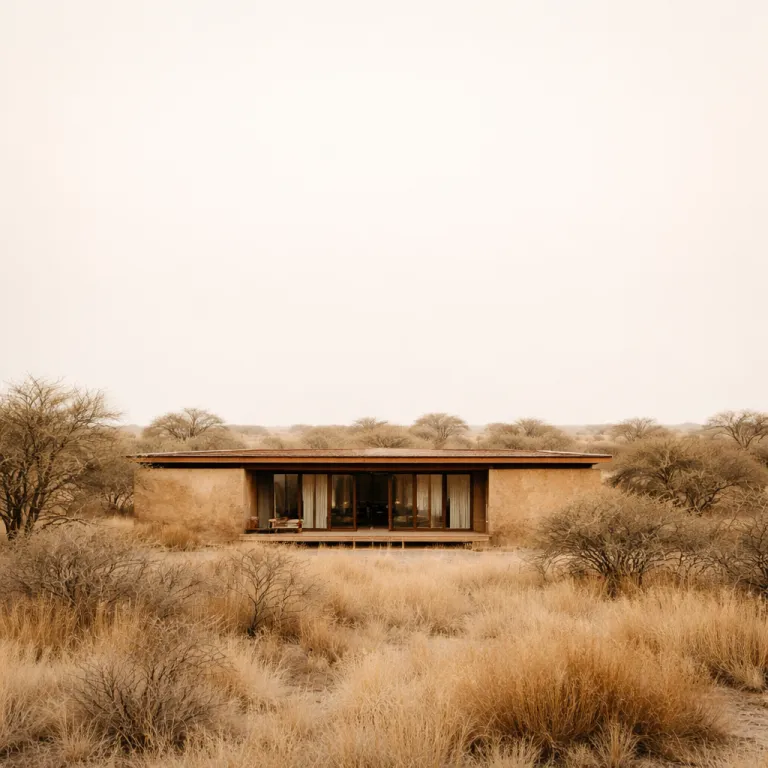
Architectural safari lodges in South Africa that vanish into the landscape
Architectural safari lodges in South Africa that vanish into the landscape
Architectural safari lodges in South Africa are no longer content to simply frame the view. Across the country, a new generation of lodge architects is working to make buildings recede so the bush and the wildlife hold the stage. For guests who care as much about design as game viewing, this shift changes how you choose a safari lodge and how you experience every hour in the reserve.
The movement is clearest in the way leading studios treat mass and material. ARRCC’s Afro-minimalism at Cheetah Plains Lodge in the Sabi Sand Game Reserve (completed in 2018), Black Sable’s work at Noka Camp in Lapalala Wilderness (opened in 2019) and Melote House in the Waterberg, and WORS Architects’ safari lodges in Limpopo all use low profiles, deep overhangs, and raw textures so lodges sit almost flush with the bush rather than crowning it. These are safari lodges where a suite can feel like a bush camp hide, yet still deliver a full luxury safari experience with plunge pools, serious dining, and quietly attentive service.
Look first at the roof line when you arrive at any safari lodge in a private game reserve or a national park. If the roof cuts a hard silhouette against the sky, the building is fighting the landscape; if it folds, steps, or disappears under green roofs and timber screens, you are in the new idiom of architectural safari lodges South Africa travelers now seek out. This is where a suite or a cluster of suites can open completely to the bush, where plunge pools hover over dry riverbeds, and where game viewing from your bed feels as considered as the game drives themselves.
The studios shaping the new safari lodge idiom
Three studios sit at the center of this landscape-led movement in Africa. ARRCC, the Cape Town–based team behind Cheetah Plains Lodge in the Sabi Sand, has refined an Afro-minimalist language that strips away safari clichés while keeping a strong African sense of place. As ARRCC’s designers describe it in their project notes, the aim is to create “quiet architecture that lets the veld do the talking,” and their work shows how a private suite can be both sculptural and recessive, with overhanging roofs and stone plinths that echo the surrounding bush lodge terrain.
Black Sable’s Noka Camp, completed in 2019 on a cliff edge above the Palala River, and Melote Lodge in the Waterberg push the idea of a private game retreat perched on cliffs and ridges, yet still anchored in local stone and raw timber. WORS Architects, working across Limpopo and the Eastern Cape, focuses on bush camps and safari lodges that almost dissolve into koppies and riverine thickets, using passive ventilation instead of heavy mechanical cooling. Together these practices prove that a luxury safari lodge in a game reserve can be both indulgent and environmentally literate, with suites, plunge pools, and even a wine cellar designed around the rhythms of African wildlife rather than against them.
In the Sabi Sand and the wider Greater Kruger region, this design language meets some of the continent’s most storied private reserves. Properties like Leopard Hills, which we review in detail in our intimate Sabi Sand safari retreat guide, show how elevated decks, low-slung roofs, and carefully angled suites can deliver exceptional game viewing without dominating the landscape. Here, guests move from suite to main lodge along boardwalks that weave through the bush, while game drives and walking safaris start from spaces that feel more like shaded clearings than traditional lodges.
Materials that let safari lodges disappear: stone, timber, and air
If you care about design, materials will tell you almost everything about a safari experience before you even check in. The most compelling architectural safari lodges South Africa offers are built from local stone, raw timber, and air itself, through passive ventilation. These choices are not aesthetic flourishes; they are the structural language that lets a lodge belong to its reserve and its African wildlife corridor.
Local stone grounds a safari lodge in its specific game reserve, whether that is the granite outcrops of the Sabi Sand or the red earth of a Kruger National Park buffer zone. Raw timber softens the line between deck and bush, especially when plunge pools are edged with untreated wood that will silver in the African sun. Passive ventilation, achieved through high clerestory windows, deep verandas, and carefully oriented suites, means guests feel the bush breeze rather than sealed air conditioning, and game viewing from your bed or plunge pool becomes a sensory African safari rather than a screened spectacle.
This material honesty is spreading beyond the bush into urban and winelands properties that share guests with the safari circuit. Our review of design-forward estate stays in the winelands, in the feature on Cape Winelands estate stays where the wine list tells the story, shows the same commitment to stone, timber, and air in a different context. When you move from a Lion Sands–style luxury safari lodge with plunge pools and a serious wine cellar to a low-slung vineyard suite, the continuity of materials keeps your South Africa journey feeling coherent and quietly elevated.
Roof lines, off grid thinking, and the tension between presence and disappearance
Roof lines are the quickest way to read whether a safari lodge respects its landscape. In the best architectural safari lodges South Africa has produced, roofs hover, fold, or sink into planted berms so that from a distance you see bush and sky, not shingles and glass. This is as true in the Sabi Sand as it is along the Sabie River near Kruger’s southern edges, where new projects are pushing off-grid thinking further.
Elephant Point River Suites, designed to operate off grid from day one and opened in the early 2020s on a private concession bordering Kruger, takes eco architecture as its starting brief rather than a retrofit. Khensani River Lodge and Musiya’s Camp, part of a new cohort in the Sabi Sand and adjacent MalaMala Game Reserve, are built around landscape-led architecture that treats every suite as a discreet pavilion tucked into the bush. Inside, though, the experience is unapologetically luxury safari, with plunge pools or plunge pools sized for proper laps, deep soaking baths, and dining terraces that double as private game viewing platforms.
This is the central tension of the movement: from the riverbank a bush lodge might vanish into reeds and fever trees, yet inside guests expect flawless climate control, fast connectivity, and a wine cellar that can handle serious African and international labels. The best lodges resolve this by using passive ventilation first, then discreet technology, so that your safari experience feels elemental rather than engineered. When you compare these properties with more urban luxury openings, such as the design-driven Marriott’s Cape Town Edition we cover in our feature on Cape Town’s new generation of luxury hotels, you see how roof lines and energy strategies signal a property’s values long before you read the sustainability page.
When the style is overused, and how to book for real design value
Any strong design movement risks becoming a look rather than a philosophy, and safari lodges are no exception. Across South Africa, some properties now copy the language of low roofs, raw timber, and plunge pools without the underlying respect for the bush or the game reserve. You will see safari lodges where suites are technically low slung, yet still floodlit at night, disrupting wildlife patterns and undermining the African safari experience guests came for.
This is where booking strategy matters for design-literate travelers using a luxury and premium hotel platform. Africa Travel Designers has tracked how architecture itself has become a primary booking reason, and their curation helps separate genuinely landscape-led lodges from those that simply mimic the aesthetic. When you read that “a design style combining African aesthetics with minimalism” and “yes, they emphasize sustainability and environmental conservation” and “how to book a stay at these lodges? Contact lodges directly or use reputable travel agencies,” you get a concise summary of what serious Afro-minimalist properties aim for.
On mysouthafricastay.com, we apply the same filter when we review a Lion Sands property in the Sabi Sand, a Singita lodge in a private game reserve, or a new bush camp near Kruger’s western borders. We look at whether each suite or cluster of suites genuinely disappears into the bush, whether game drives are balanced with from-the-deck game viewing, and whether the wine cellar and dining program feel rooted in Africa rather than imported. Book in advance, check seasonal weather, and follow lodge guidelines, but also read roof lines, materials, and night lighting; that is how you secure a stay where architecture, wildlife, and your own sense of quiet luxury align.
FAQ
What defines the new generation of architectural safari lodges in South Africa?
The new generation of architectural safari lodges in South Africa is defined by buildings that recede into the landscape rather than dominate it. Architects use local stone, raw timber, and passive ventilation to create low-profile lodges and suites that blend with the bush while still offering luxury safari comforts. Roof lines, material honesty, and minimal night lighting are key indicators that a lodge respects its surrounding game reserve and wildlife.
Are these design led safari lodges eco friendly in practice?
Most leading architectural safari lodges in South Africa are built around sustainable principles from the outset. They prioritize off-grid or low-impact energy systems, water-sensitive design, and construction methods that minimize disturbance to the bush and the game reserve. Many also partner with local communities and conservation organizations so that your safari experience directly supports African wildlife protection and regional economies.
How should I choose between different safari lodges if design matters to me?
If design is a priority, start by studying roof lines, materials, and site plans rather than just interior photographs. Look for lodges in private game reserves like the Sabi Sand or near Kruger’s borders that use low-slung forms, deep verandas, and suites oriented for natural game viewing. Reviews from design-focused platforms such as mysouthafricastay.com and specialist agencies like Africa Travel Designers can help you identify properties where architecture, wildlife, and service are equally considered.
What is Afro minimalist design in the context of safari lodges?
Afro minimalist design in safari lodges combines clean, pared-back forms with distinctly African textures, art, and craft. Instead of heavy theming, you will find simple lines, generous volumes, and a restrained palette of stone, timber, and woven elements that frame the bush rather than compete with it. This approach allows a suite or main lodge to feel both contemporary and rooted in Africa, with the wildlife and the landscape providing most of the drama.
When is the best time to book and what practical tips should I follow?
High demand for architectural safari lodges in South Africa means you should book in advance, especially for peak dry season when game viewing is strongest. Always check seasonal weather for your chosen game reserve, as conditions in the Sabi Sand, the Eastern Cape, and Limpopo can differ significantly. Once confirmed, follow lodge guidelines on packing, conservation etiquette, and safety so that your safari experience is both seamless and respectful of the bush.