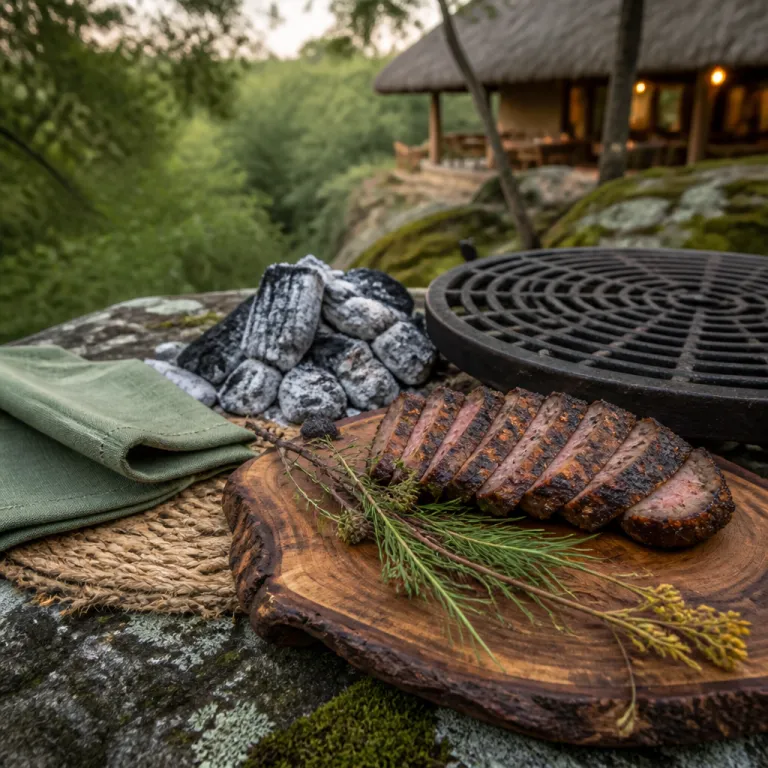
From backyard flames to a luxury braai experience at a safari lodge
The phrase luxury braai experience at a safari lodge captures a shift in South African hospitality. What began as a simple backyard braai barbecue for many South Africans now anchors some of the most ambitious lodge experiences in the African bush, from Madikwe to the Kruger area. Families who book a safari lodge in South Africa today expect not only wildlife and game drives, but a fire-led culinary journey where every dinner feels choreographed yet relaxed.
At its heart, the braai is the national fire ritual of South Africa, a social anchor where good company, shared food and open-fire smoke do the talking. Lodges have taken that same South African food culture and layered in sommelier-led wine pairings, refined dining service and chefs who treat coals as precisely as a tasting-menu kitchen treats its stove. The result is a safari experience where the word braai means both comfort and craft, and where children can watch lamb chops hiss over the flames while parents compare wines from across the country.
What separates a lodge braai from a suburban gathering is the setting and the sourcing. You sit in a firelit boma, ringed by the African bush, with the distant cough of a leopard replacing city traffic and the Milky Way standing in for streetlights. On a still day the smoke drifts low over the reserve, carrying the scent of game cuts and grilled vegetables, and you understand why a braai in a game reserve is never just about food but about place.
Inside the boma: how lodges stage the firelit theatre
Walk into a well-run boma and you feel the luxury braai atmosphere before you see the menu. A circle of open fire pits throws light onto the sand, lanterns mark pathways through the bush, and staff move quietly between tables as if this were a city dining room rather than the African bush. Children drift towards the flames, adults towards the bar, and the whole lodge experience tightens around that shared glow.
Most properties follow a similar rhythm for the evening safari experience, shaped by years of South African lodge practice. Guests return from an afternoon safari through the reserve, pause for coffee, tea or a chilled glass of wine, then follow the sound of drums or soft music to the boma where the braai barbecue is already underway. Pre-dinner snacks are served family style around the fire, and by the time you sit down the first game skewers and lamb chops have picked up a delicate char.
Some hosts, such as Molori Safari Lodge and Jaci's Safari Lodge in the Madikwe Game Reserve, use the boma to showcase both traditional and contemporary South African food. At Molori, for example, executive chef Kabelo Segone has featured dishes such as kudu loin with wild rosemary and smoked mielie pap, while Jaci’s often pairs boerewors coils with chakalaka, roosterkoek and a sweet, braai-inspired dessert station laid out under a marula tree. One head chef described it simply: “We want guests to taste the bush, not just look at it.” For more urban context on how South African kitchens are rethinking fire and flavour, the piece on Cape Town lodge tasting menus shows how the same philosophy plays out far from the bush.
From coals to courses: Michelin technique meets the African bush
The most compelling luxury braai experiences at safari lodges treat the fire as a serious kitchen, not a sideshow. Across South Africa, chefs with fine-dining backgrounds now run safari lodge kitchens, bringing the discipline of tasting menus to the unpredictability of open-fire cooking. At Elephant Point River Lodge, for example, the SAN African Table experience offers a multi-course dinner that treats the braai as a canvas for regional flavours rather than a simple grill.
This shift changes how food moves from bush to plate during a safari stay. Cuts of game are dry-aged and portioned with the same care you would expect in a city restaurant, vegetables are sourced within a tight radius of the reserve, and indigenous herbs from the African bush are used to smoke or baste meat over the coals. A plate of lamb chops might arrive with wild garlic and num-num berries, while a vegetarian guest with specific dietary requirements receives charred pumpkin and grains that feel as considered as any meat course.
Wine service has kept pace with this evolution, turning the boma dinner into a full-scale dining event. Many lodges now build pairings as carefully as estates in the Cape Winelands, a trend explored in depth in our guide to wine-first menu design. When a sommelier pours a Swartland syrah beside kudu fillet grilled over open fire, the line between rustic braai barbecue and high-end dining blurs in the best possible way.
What to look for when you book a braai focused safari lodge
Choosing a luxury braai-focused safari lodge in South Africa means reading between the lines of glossy brochures. Instead of chasing the biggest game reserve name, pay attention to how a property talks about its food culture, its fires and its chefs. A serious lodge will mention sourcing from nearby farms, referencing the African bush and local communities rather than generic buffet language.
Ask specific questions before you book, especially if you travel as a family or have dietary requirements. Do they offer a proper cooked breakfast as well as lighter options, and can they adapt both breakfast and dinner menus for children without defaulting to fried food every day? Clarify whether braai nights happen once per stay or form a regular part of the lodge experience, and whether guests can watch or even help as lamb chops, game sausages and vegetables go onto the grill.
Many safari lodges in South Africa now advertise braai experiences, but the quality varies widely. Some operators specialise in combining Big Five drives with traditional braai barbecue evenings, while high-end hosts like Molori Safari Lodge focus on more intimate, design-led fire dinners. Typical luxury properties might price a fully inclusive stay from around R6,000 to R15,000 per person per night, depending on the reserve and season. A lodge manager summed it up: “If we talk more about our buffet than our fire, we know we are doing something wrong.” For a broader sense of how premium properties manage service, our feature on excellence in South African hospitality outlines the service standards you should expect at this level.
Families, rituals and the social soul of the braai
For many South Africans, the braai is less about food and more about rhythm, and luxury lodges that understand this create a different kind of safari experience for families. Parents can relax into good company around the fire while children toast marshmallows, listen to stories about the African bush and learn new animal names from rangers. The word safari becomes as much about shared evenings as about the early morning drive through the reserve.
Thoughtful properties design the entire day around this ritual, balancing game drives, pool time and quiet hours so that everyone arrives at dinner hungry but not exhausted. A light lunch and an unhurried afternoon coffee and tea service mean that by sunset, guests are ready to gather near the open fire, watch the chefs tend to the South African-style grills and choose between game, lamb chops or vegetarian plates. Breakfast the next morning often returns to the same circle, with eggs cooked over coals and fresh bread served family style while the bush slowly wakes.
Families should also look for small but telling details when they book a safari lodge in South Africa. Are children invited to help turn boerewors under supervision, or to learn a few South African words related to the braai and the bush? When a property treats the braai barbecue as a shared cultural moment rather than a themed buffet, the lodge experience becomes a gentle introduction to national traditions for younger travellers and a reminder of home for South Africans abroad.
Practical guidance for planning your braai centred safari
Turning the idea of a luxury braai experience at a safari lodge into a real trip starts with timing and expectations. Many properties schedule their most elaborate boma dinners on specific nights, so if the fire ritual is central to your safari experience, ask which day carries the full braai barbecue spread. It is wise to book in advance, check dietary options and dress appropriately for outdoor dining, especially in cooler months when the African bush can feel surprisingly crisp after dark.
Understanding the basics helps you read lodge descriptions more clearly when you skip content-heavy marketing language. “What is a braai?” is a common first question, and the most accurate answer remains simple: “A South African barbecue involving grilling over an open fire.” Another frequent query is whether these evenings are part of the rate, and lodges are clear that “Are braai experiences included in safari packages?” is best answered as follows: “Often included; confirm with the lodge.”
Guests with allergies or specific food culture needs should be reassured by one more line that matters in South Africa’s hospitality landscape. When travellers ask “Can dietary restrictions be accommodated?” the honest industry response is: “Yes, most lodges cater to dietary needs.” With that clarity, you can focus on the more enjoyable decisions, such as whether your ideal lodge sits deep in a private game reserve or closer to a national park, and whether you prefer a quiet firelit dinner or a more social circle of good company under the stars.
FAQ
How often do lodges host braai dinners during a safari stay?
Most safari lodges in South Africa host at least one braai-focused boma dinner during a three-night stay. Properties that emphasise a luxury braai experience may offer some form of open-fire cooking every night, alternating between large communal evenings and smaller, more private dinners. Always ask for a sample programme so you can match your travel dates to the most atmospheric fire nights.
Is a braai suitable for families with young children?
Yes, a braai-centred safari experience can work very well for families, provided the lodge is genuinely family friendly. Children usually enjoy the drama of the open fire, the chance to taste simple grilled food and the stories about the African bush shared by rangers and staff. Look for properties that offer earlier dinner times, child-friendly menus and safe, supervised access to the fire area.
What should I wear to a boma braai dinner in the African bush?
Evenings in a game reserve can be cooler than many visitors expect, especially outside midsummer. Pack long trousers, closed shoes and a warm layer such as a fleece or light jacket, even if the day felt hot. Neutral colours work best in the bush, and a scarf or beanie can make a long, firelit dinner far more comfortable.
Can vegetarians and guests with dietary requirements enjoy a braai?
Modern safari lodges in South Africa are used to accommodating a wide range of dietary requirements. While the traditional braai focuses on meat and game, chefs now plan substantial vegetarian and vegan options, from grilled vegetables and salads to plant-based skewers cooked over the same open fire. Always share your needs when you book so the kitchen can design a satisfying lodge experience for every meal, from breakfast to dinner.
How does a braai at a safari lodge differ from a typical home barbecue?
A braai in a safari lodge setting differs from a home barbecue in three key ways: the setting, the sourcing and the service. You eat under the stars in the African bush, often inside a traditional boma, with the sounds of the reserve around you instead of city noise. Ingredients tend to be locally sourced game and seasonal produce, and the whole evening is run with the timing and polish of a fine-dining restaurant rather than a casual backyard gathering.