Why eastern cape safari lodge luxury belongs on your shortlist
Eastern Cape safari lodge luxury is for travellers who want the Big Five without the convoy of vehicles. In this quieter corner of South Africa, each game drive feels like a private conversation with the bush rather than a performance for a dozen safari trucks. You trade airport queues for an easy drive from Gqeberha, and the wilderness repays you quickly with uncrowded sightings and a slower rhythm.
The region’s private game reserves sit in rolling hills and spekboom thickets rather than the flat savannah many people associate with an Africa safari. That varied landscape means you can watch wildlife move from open plains to dense bush and down to the river in a single morning. It also means every game lodge has a slightly different view, from Kariega Game Reserve’s dual river valleys to the wide grasslands and ravines of Amakhala Game Reserve.
Despite its Big Five credentials, the Eastern Cape remains oddly under the radar compared with Kruger and the Sabi Sand. Many international travellers fly straight from Cape Town to the north, missing the fact that Port Elizabeth (Gqeberha) is only about an hour away by air from both major cities in South Africa.1 For independent travellers who value space, that lack of fame is precisely the point and a key reason to consider an Eastern Cape safari lodge over busier parks.
Here, the focus is not the fastest tick list of big animals but the rhythm of safaris that feel unhurried. Morning and afternoon game drives are often capped at around six guests per vehicle in many lodges, which keeps sightings calm and the bush soundscape intact.2 When a lion pads out of the riverine bush or an elephant crosses the track, you are not jostling for a photograph or competing with a line of vehicles.
Founders Lodge, for example, offers exclusive Big Five game drives with access to Shamwari Private Game Reserve. That access to the wider Shamwari Private landscape gives guests a sense of scale while the lodge itself keeps the atmosphere intimate and quietly luxurious. This is Eastern Cape safari lodge luxury at its most considered, where conservation, privacy and service are weighted equally and the game lodge feels like a private home in the bush.
The malaria free advantage for families and cautious travellers
One of the strongest arguments for Eastern Cape safari lodge luxury is simple and practical. The main private game reserves here are widely promoted as malaria free, which changes the equation for families and anyone who prefers to avoid prophylaxis.3 You can bring young children on safari in South Africa without the extra medical admin that often shadows a trip to the lowveld or other higher-risk regions.
Parents weighing up an Africa safari often compare Kruger with the Eastern Cape and feel torn. Kruger has the name recognition, but the malaria free status of reserves like Amakhala, Kariega and Shamwari Private Game Reserve is a decisive advantage for many. It means you can focus on choosing the right accommodation and game lodge style rather than worrying about medication schedules and clinic visits before you travel.
Many lodges in this part of South Africa have leaned into that family friendly positioning. You will find climate accommodation that is carefully designed for multi generational groups, with interleading suites, fenced private decks and flexible dining. Staff are used to tailoring game drives and walking safaris to different ages, from short bush bumbles for toddlers to longer interpretive walks for teens who want to learn about tracks, insects and river ecosystems.
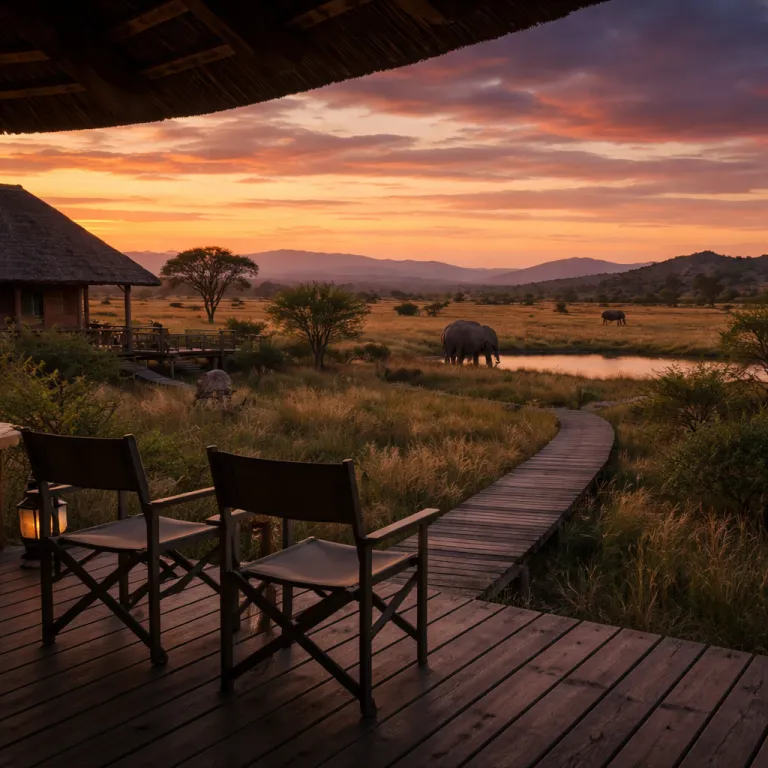
The daily rhythm is predictable in the best way. Morning game drives head out at first light, when wildlife is most active and the bush is still cool. Afternoon safaris stretch into golden hour, ending with a sundowner as the river reflects the last light and the first nocturnal calls start up around the game lodge.
If you are considering timing, May to September offers optimal wildlife viewing. That cooler, drier window lines up neatly with many school holidays in Europe and the UK, which makes Eastern Cape safari lodge luxury an easy fit for family calendars. For late planners, regional winter safari season guidance shows why even last minute bookings in early winter can still deliver excellent game viewing and rewarding game drives.
Even though the region is considered malaria free, lodges still recommend basic precautions. Pack light, neutral coloured clothing, use insect repellent in the evenings and listen to your guide’s advice around the camp and in the bush. Those small habits keep the focus firmly on the wildlife and the pleasure of being out on safaris rather than on health worries.
Key eastern Cape reserves and what sets them apart
Not all Eastern Cape safari lodge luxury feels the same, and that is part of the appeal. Each private game reserve has its own character, shaped by topography, conservation history and the style of its lodges. Choosing the right one is less about chasing the biggest marketing budget and more about matching your travel personality to the landscape and the type of game drives you enjoy.
Shamwari Private Game Reserve is the heavyweight name in this part of South Africa. It has a long standing conservation focus, with dedicated rehabilitation centres and a serious approach to habitat restoration documented on its own conservation pages.4 Guests at properties like Founders Lodge benefit from that depth of expertise while still enjoying a quiet, high touch lodge environment and classic Eastern Cape bush scenery.
Amakhala Game Reserve offers a different kind of intimacy. This is where Amakhala Game Reserve’s lodges, including the well regarded Hlosi Game Lodge, sit in a landscape of open plains, thicket and river valleys that feel immediately accessible. Amakhala game drives tend to be relaxed and unhurried, with guides who know every bend in the river and every patch of bush where a cheetah might flatten itself into the grass. One ranger describes it as “guiding in your own back garden, just with more elephants”.
Kariega Game Reserve, further east, is defined by water. Its dual river setting means you can combine traditional game drives with boat trips, watching wildlife come down to drink while fish eagles call overhead. Kariega Game Reserve’s lodges range from family friendly to ultra private, but all share that sense of being wrapped by river and bush rather than sitting on the edge of it, which makes every safari feel close to the water.
Other names worth knowing include Pumba Private Game Reserve, home to rare white lions and a strong focus on authentic Africa safari experiences. Lalibela Game Reserve’s Kichaka Lodge offers ten suites with modern colonial decor and Big Five safaris that feel polished but not overproduced. These properties show how Eastern Cape safari lodge luxury can be both varied and consistently high in standard across different private game reserves.
If you are used to flying straight from Johannesburg to Kruger after a business trip, consider a different pattern. Many executives are now extending work trips by adding a few days in a private game reserve closer to the coast, a shift explored in depth in this piece on rewriting the extended work trip. Swapping Kruger for an Eastern Cape game lodge cuts down on travel time while keeping the sense of escape intact and adding easy access to the coast.
New openings and evolving luxury: ENVI Addo and beyond
Eastern Cape safari lodge luxury is not static; the region keeps adding thoughtful new options. One of the most anticipated is ENVI Addo Private Reserve, opening with ten safari tents and three private lodges next to Addo Elephant National Park. Its solar powered design signals where high end Africa safari accommodation is heading in South Africa, with climate conscious architecture that still feels indulgent.
Addo Elephant National Park is currently described by SANParks as the only Big Five national park in the Eastern Cape, home to a dense elephant population.5 The arrival of ENVI Addo Private Reserve on its doorstep will give travellers another way to blend national park self drive experiences with fully guided safaris in a private game setting. That combination suits independent travellers who like to mix structured game drives with time behind their own steering wheel.
Eco friendly practices are not a marketing afterthought here. Across the Eastern Cape, lodges are investing in solar power, water wise landscaping and low impact building materials that sit lightly in the bush. Guests increasingly ask how their chosen game lodge supports local conservation organisations and communities, and the best properties answer with clear data on projects and partnerships rather than vague promises.
Founders Lodge, Pumba Private Game Reserve, Amakhala Game Reserve and Lalibela’s Kichaka Lodge all work with local conservation partners. Their objectives are aligned: provide intimate wildlife encounters, offer luxury accommodations, ensure personalised service and promote conservation efforts. When you book into this tier of Eastern Cape safari lodge luxury, you are buying into that model of crowd free safaris that still have a measurable impact on the surrounding landscape.
The experience on the ground reflects that ethos. Morning game drives might focus on tracking a pride of lions across open plains, while afternoon safaris linger along the river to watch hippos surface and kingfishers hunt. Between drives, you return to climate accommodation that is cool, quiet and designed for rest rather than spectacle, with shaded decks that look straight onto the bush.
Innovation also shows up in how activities are structured. Guided bush walks and walking safaris are increasingly offered as a complement to vehicle based game drives, giving you a different perspective on the same wildlife rich terrain. Boat cruises on certain reserves add another layer, letting you see how the river shapes animal behaviour and vegetation patterns along the banks.
How to combine an eastern Cape safari with the Garden Route and Cape Town
For many travellers, the real power of Eastern Cape safari lodge luxury lies in how neatly it slots into a broader itinerary. You can land in Cape Town, spend a few days in the city, then follow the Garden Route east before ending with a malaria free safari. The logistics are straightforward, but the experience feels layered and considered, moving from ocean to bush in a single trip.
Cape Town gives you the urban hit: food, design, Table Mountain and the Atlantic. From there, you can either fly directly to Gqeberha for a short transfer to your chosen game reserve or drive the Garden Route over several days. That coastal road threads through forests, lagoons and beaches, offering a gentle build up before you turn inland towards the bush and the Big Five on your chosen private game reserve.
Many independent travellers choose to break the journey in the Cape Winelands before or after their safari. Estate stays in the winelands pair naturally with Eastern Cape safari lodge luxury, especially for those who appreciate good wine lists and thoughtful hospitality. For a sense of how these properties work, look at this guide to Cape Winelands estate stays where the wine list tells the story.
Once you reach the Eastern Cape, distances between key reserves are manageable. You might spend three nights at Amakhala Game Reserve, then transfer an hour or two to Kariega Game Reserve for a different river focused landscape. Alternatively, pair a stay at a Shamwari Private property with time at a smaller, more secluded game lodge to experience both scale and intimacy on the same safari holiday.
For those coming from the Cape south coast, the transition from ocean to bush is part of the charm. One day you are watching whales from a clifftop, the next you are on a game drive watching elephants fan dust over their backs. That contrast is where South Africa excels, and Eastern Cape safari lodge luxury makes the shift feel seamless rather than jarring.
When planning, think in three night blocks. Two nights on safari can feel rushed, especially when you factor in travel time from Cape Town or Johannesburg, while four or five nights split between two private game reserves gives you a deeper sense of place. Build in at least one unscheduled afternoon to simply sit on your deck, watch the river or bush below and let the sounds of the game reserve settle around you.
Practical tips for choosing and booking your eastern Cape safari lodge
Choosing the right Eastern Cape safari lodge luxury experience starts with clarity about what you value most. Some travellers want the most intense Big Five game viewing, others prioritise privacy, while many families focus on flexible accommodation and child friendly guiding. The good news is that this region has enough variety to satisfy all three without sacrificing quality or the sense of being in wild South Africa.
Look first at the size and style of the game lodge. Smaller properties like Founders Lodge or Hlosi Game Lodge offer a more intimate feel, with fewer guests on each game drive and a stronger sense of being known by name. Larger lodges on big reserves can deliver a wider range of facilities, from spas to gyms, but may feel a touch more resort like and less like a traditional bush camp.
Next, pay attention to how each private game reserve structures its activities. Ask about the average number of guests per vehicle; in the Eastern Cape, six guests per game drive is a strong benchmark for comfort and good sight lines. Check whether walking safaris, bush walks or boat cruises are included, as these add texture to the standard pattern of morning and afternoon game drives and help you experience the river and hills on foot.
Seasonality matters, but perhaps less than you think. While May to September offers optimal wildlife viewing, Eastern Cape reserves operate year round, and different months bring different moods to the bush and river systems. The key is to book in advance to secure preferred dates, especially during school holidays and peak travel periods from Cape Town and overseas.
Pack with the climate and the activities in mind. Neutral layers work best for both game drives and walking safaris, and a light jacket is useful even in warmer months when early mornings can be cool. Use insect repellent despite the malaria free status, both as a comfort measure and as part of respectful bush etiquette when you are out on safari.
Finally, consider how your safari fits into your wider South Africa itinerary. If you are combining Eastern Cape safari lodge luxury with time in Cape Town, the Cape south coast or the Garden Route, think about the order that will feel most restorative. Ending with a private game reserve stay often makes sense; after days of driving, tasting and city energy, there is something deeply satisfying about letting the bush set the pace.
Key figures that define eastern Cape safari lodge luxury
- Eastern Cape private game reserves collectively protect all five of the Big Five species, according to regional tourism bodies and the Eastern Cape Game Reserves Association, which puts them on equal wildlife footing with more famous northern parks.
- The average number of guests per game drive vehicle at properties such as Founders Lodge is typically around six guests, a figure that keeps sightings uncrowded and aligns with the region’s promise of space and quiet on safari.2
- The main safari areas in the Eastern Cape are promoted by the South African Tourism Board as malaria free, which is a key differentiator for families and travellers avoiding prophylaxis compared with some other South Africa safari regions.3
- Addo Elephant National Park is reported by SANParks to hold one of the densest elephant populations in South Africa, making it a powerful anchor for surrounding private reserves like ENVI Addo Private Reserve.5
Frequently asked questions about eastern Cape safari lodge luxury
What is the best time to visit the eastern Cape for a safari ?
May to September offers optimal wildlife viewing, with cooler temperatures and thinner vegetation that make animals easier to spot. Those months also tend to be drier, so wildlife concentrates more around water sources like rivers and dams. That said, Eastern Cape safari lodge luxury is available year round, and green season safaris can be rewarding for birdlife, newborn animals and dramatic skies over the bush.
Are eastern Cape safaris suitable for families with young children ?
Yes, many lodges in the Eastern Cape are explicitly designed with families in mind. You will find family suites, flexible meal times and shorter game drives tailored to younger attention spans. The malaria free status of the region’s private game reserves is a major advantage for parents who prefer to avoid anti malarial medication for their children.
What wildlife can I expect to see on an eastern Cape safari ?
Travellers can expect to see the full Big Five, including lion, leopard, elephant, rhino and buffalo, across the main private reserves and Addo Elephant National Park. Beyond the headline species, there are various antelope, giraffe, zebra and rich birdlife along the river systems and in the bush. Guides in reserves like Amakhala Game Reserve, Kariega Game Reserve and Shamwari Private Game Reserve are skilled at finding both the big sightings and the smaller, more interpretive moments.
How crowded are game drives in eastern Cape private reserves ?
Game drives in this region are deliberately kept small, often with around six guests per vehicle. That low number allows for better sight lines, quieter sightings and more interaction with your guide. Compared with some busier parts of Kruger, Eastern Cape safari lodge luxury feels markedly less crowded, which suits travellers who value space and calm.
Do I need to take malaria tablets for an eastern Cape safari ?
The main safari areas in the Eastern Cape, including private game reserves like Amakhala, Kariega and Shamwari Private Game Reserve, are generally classified as malaria free. Most travellers do not take prophylaxis for these destinations, although you should always confirm with your healthcare provider. Basic precautions such as using insect repellent and wearing long sleeves in the evening remain sensible, but the overall risk profile is much lower than in many northern parks.
1 Flight times and access details are based on current schedules published by major South African airlines and tourism authorities and may change seasonally.
2 Guest-per-vehicle figures are typical operating guidelines published by individual lodges and may vary by season, vehicle type and private booking arrangements.
3 Malaria classifications follow guidance from the South African National Department of Health and South African Tourism; travellers should always seek personalised medical advice.
4 Conservation information for Shamwari Private Game Reserve is drawn from the reserve’s own published conservation and rehabilitation programme summaries.
5 Big Five and elephant density data for Addo Elephant National Park are based on current summaries provided by SANParks.